One-Day Course:
Sunday, November 15; 8:30am – 5:00pm
Deborah A. Peru, DP Spectroscopy and Training, LLC, Lebanon, NJ
COURSE DESCRIPTION
This course is based on industrial experience in developing quantitative spectroscopy methods for use in quality-by-design scale-up, process monitoring & control, and quality assurance testing. Topics discussed include common measurement errors, procedure design, spectral preprocessing, wavelength selection strategies, equation development, and lifecycle procedure management. Each lesson includes case study examples to emphasize key principles. Participants can observe, ask questions, and learn how to develop quantitative methods. The information can be applied to the development of quantitative procedures using Ultraviolet, Visible, near-infrared, mid-Infrared, and Raman instruments. A live demonstration of common pitfalls and spectral data anomalies illustrates how statistics and principal component analysis provide guidance during both the development and ongoing stages of model maintenance.
WHO SHOULD ATTEND
This course is ideally suited for new or experienced scientists, process engineers, and managers who want to expand their knowledge of developing and implementing spectroscopic methods for the determination of key ingredients, and properties of interest. This course is applicable for managers supervising the development and use of spectroscopic instruments in R&D, quality, and manufacturing:
• R&D Managers, Scientists, and Engineers (all fields – pharma, chemical, forensics, food, environmental, etc.) • QA/QC personnel
• Process analytical technology (PAT) personnel
TOPICS
- Introduction to Quantitative Spectroscopic Analysis
a. What is quantitative spectroscopic analysis?
b. When and where is it used
c. Defining the problem - Types of Measurement Error
a. Common sources of error
b. Propagation of error during development
c. Signal-to-Noise - Data Analytics & Procedure Design
a. Elements in procedure design
b. Designing the “training set”
c. Analytical controls - Fit for Purpose
a. Defining “Fit for Purpose”
b. Points of use of spectroscopy instrumentation - Types of Quantitative methods
a. Variable extraction methods: Peak area, Peak ratio, MCR
b. Fundamentals of CLS, MLR, and collinear variables
c. Chemometric modeling (PCR vs PLS) and the multiplicative advantage
d. Review of variable selection strategies (supplemental handout)
e. Modeling metrics and outlier detection - Spectral Preprocessing tools
a. Scaling (e.g., SNV)
b. Filtering (e.g., derivatives, baseline correction)
c. Model-based (e.g., multiplicative scatter correction)
d. Mean centering - Validation and Lifecycle Procedure Management
a. Validation Metrics: accuracy & recovery, linearity, specificity, Precision (repeatability & Intermediate robustness)
b. Implementation and procedure monitoring/updating - Case Study Modeling Example & Wrap-up
a. The course ends with a live demonstration of common problems and challenges in developing methods. The instructor will use live chemometric software to spark an interactive discussion on how to develop and optimize a quantitative calibration model
b. Wrap-up Q&A
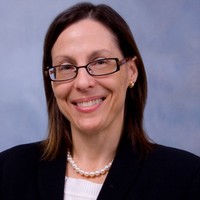
ABOUT THE INSTRUCTOR
Deborah Peru (M.B.A., Nutritional Science, B.S., Chemistry B.A.) is the Owner and President of DP Spectroscopy & Training LLC. She has over 40 years of experience in industrial R&D and process analytical technology (PAT) in the petrochemical, specialty chemical, consumer products, and pharmaceutical industries. Ms. Peru’s research experience is in developing near-infrared, mid-infrared, Raman, and SERS methods for laboratory and in-line measurements. Her PAT experience also includes use of laboratory reactors and in-situ particle size analyzers for optimizing products & processes for improved yield, stability and performance. She has developed numerous applications that incorporate qualitative and quantitative spectroscopy models for quality assurance, manufacturing cost savings, and finished-product testing. Ms. Peru is serving as the Secretary for both the Coblentz Society and is the Treasurer and Secretary of the New York/New Jersey Regional Section of the Society for Applied Spectroscopy (SAS) and is the recipient of the 2019 SAS Distinguished Service Award